
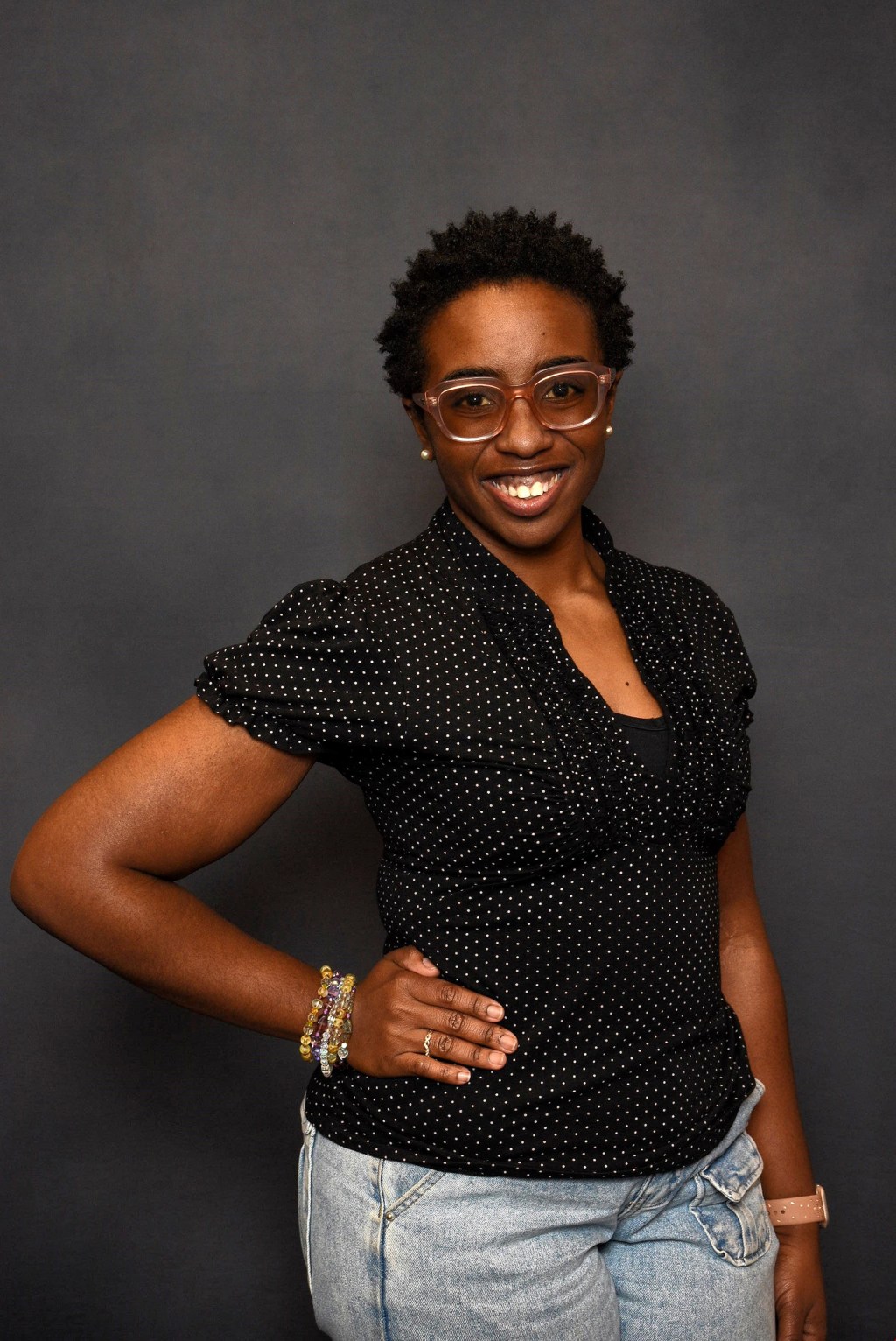
Singer-songwriter, music educator, and researcher Kelsie Janel (Spears) is truly a musical phenomenon in her own right. Receiving acclaim throughout South Africa, she has written over 150 songs, has over 100 beats in her catalog, and has engineered not only for herself but also for other artists. Her humble beginnings in music came at the tender age of eight, when she began writing songs and learning her first instrument, the violin. From that point, Kelsie Janel learned how to play piano and numerous other instruments on her own. It was not enough for Kelsie to pursue her own style of Gospel music alone, but she wanted to pursue something that could change the lives of families on a holistic level – her scholarly research.
Kelsie is a graduate student at Teachers College, Columbia University, pursuing a Master of Arts in Music & Music Education. Her groundbreaking research idea focuses on using vocal instruction as a bridge to verbal communication for nonverbal learners and on developing the innovative From Silence to Song™ methodology. Currently in the development stage of a mixed-methods study, she wishes to conduct research with 60 nonverbal children and adolescents aged 5-21 (split into three groups). Kelsie’s work addresses a critical gap in communication intervention strategies by leveraging the neurological connections between musical processing and language acquisition.
Drawing from Vygotsky’s Zone of Proximal Development theory, Kelsie’s three-stage curriculum progresses from breath awareness through vocalization to meaningful verbal communication. Her research has the potential to establish vocal pedagogy as a valuable therapeutic tool for supporting language development in diverse populations, particularly students with autism spectrum disorder and developmental delays.
Kelsie’s passion for this work stems from a deeply personal experience as the mother of a twice-exceptional child. She has witnessed firsthand the transformative power of these techniques, which have successfully supported her son’s journey from minimally verbal to fully communicative through music-based interventions. This personal experience, combined with her professional training, drives her commitment to helping other families navigate similar communication challenges.
Kelsie believes that music is the gift that keeps on giving and is dedicated to sharing this gift in innovative ways. Her work represents both rigorous academic research and heartfelt advocacy for creating inclusive music education environments where all students can find their voice and transition from silence to song.
Philosophical Approach
Building Our Village
Music education in my classroom starts with the village mindset. Yes, there is a village “leader,” but every member of the village is valued because they play a part in the village ecosystem. Digital tools serve as bridges that connect our classroom village to the global community of musicians, allowing us to learn from and collaborate with voices beyond our physical walls.
Honoring Every Voice
No musical idea is a bad idea. It may be different, but it is not a bad idea. Every musical idea will be heard, appreciated, and respected. Multiple pathways for expression, whether through traditional instruments, digital creation tools, or collaborative platforms, honor diverse learning styles and abilities while amplifying this core principle.
Celebrating Our Cultures
Inside my music classroom, we will break the norm by studying music from the cultures of the classroom and taking them seriously. All programmed events will showcase music from the classroom culture. Authentic recordings, virtual cultural exchanges, and digital archives become our cultural gateways, bringing the world’s musical traditions into our learning space.
Learning Together
I will not only teach “in front of” my students, but also among them. I will not teach “at” them but teach “with” them. Just as they are learning, so am I, and we are in this learning process together. Digital tools enable us to be co-researchers and co-creators, using various platforms to explore, compose, and discover music as a unified learning community.
Navigating Uncertainty as ONE
If ever a time of musical uncertainty (for either my students or myself), we will work together to navigate that place of uncertainty and make it a teachable moment for both me and my students. Available resources and digital tools provide opportunities for us to investigate musical questions together, ensuring that barriers of access (whether economic, physical, or geographical) never prevent any village member from participating fully in our musical journey.
Love, Intention, and Village
Cultivating strong musicianship through love, intention, and village-focused learning will always be the pinnacle of my method of teaching. Both digital resources and intentional access considerations serve this goal by ensuring that every student can engage meaningfully with music, regardless of their starting point, home resources, or individual learning needs.
 Your Story. Your Song.